How to Engage Your Glutes When Running (Complete Guide)
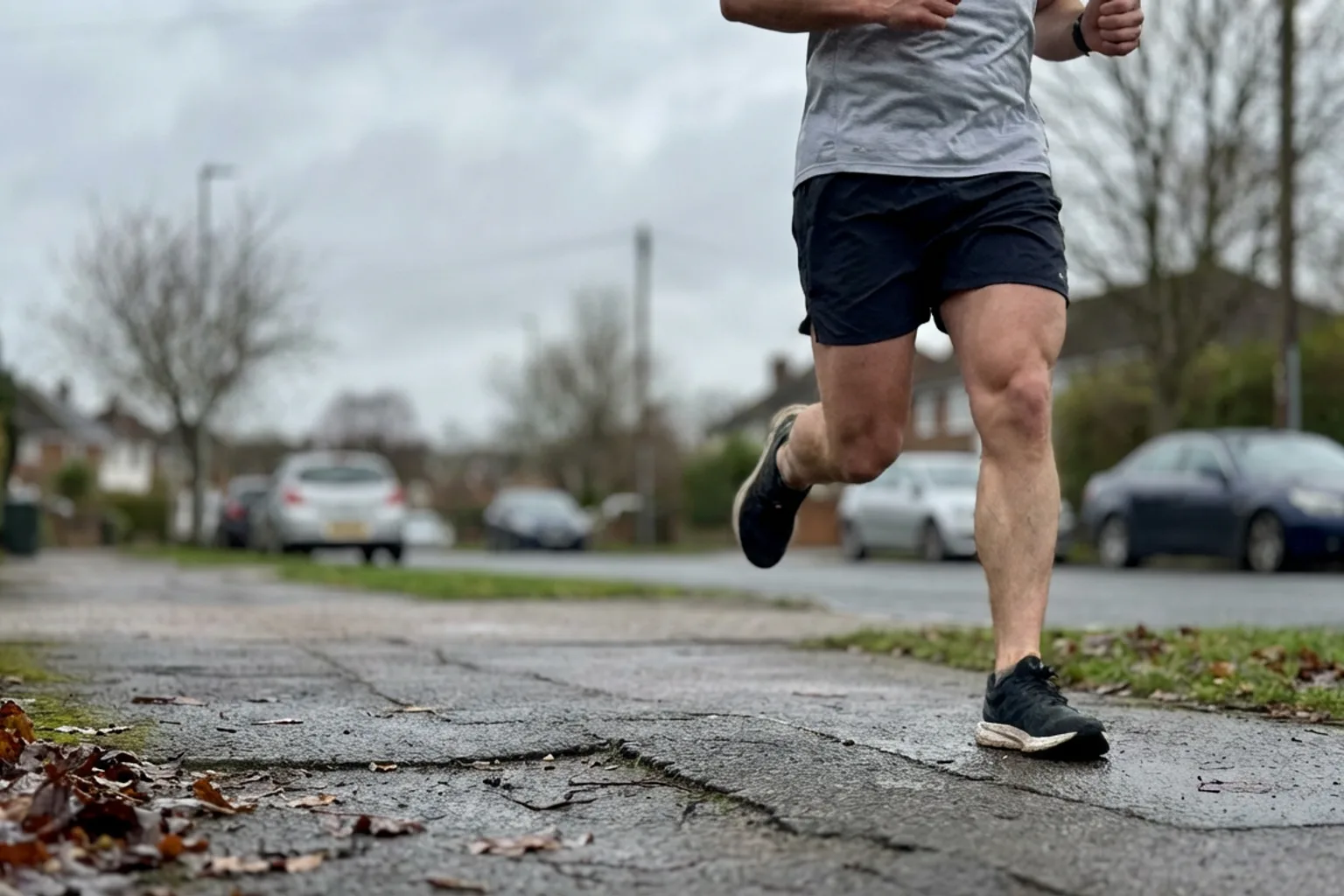
Your physio has probably said it at least once: "You're not using your glutes properly." I hear this from runners every single week. And the frustrating part? Most of them are already doing squats and lunges, wondering why nothing is changing.
Here's the thing. Knowing how to engage your glutes when running isn't just about doing more exercises. It's about teaching your body a completely new movement pattern. Get that right, and everything else follows.
Quick Answer: To engage your glutes when running, you need to do three things. First, teach your glutes to fire with basic isolation exercises. Second, correct your pelvic posture so your glutes are in the right position to work. Third, adjust your running form to actively use your glutes with every stride. This guide walks you through each step in detail.
The gluteal muscles sit at the very top of the list when it comes to important muscle groups for runners. They provide strength and stability around your hips, and they're a powerful source of propulsion. When they're not doing their job, other muscles pick up the slack. That's when injuries start creeping in.
I've worked with hundreds of runners dealing with everything from plantar fasciitis to lower back pain, and in a huge number of cases, poor glute engagement is a root cause. The good news is that it's fixable. Let me show you how.

What Are the Gluteal Muscles?
Before we get into how to engage your glutes when running, it helps to know exactly what we're working with.
You have three gluteal muscles, and each one plays a different role in running:
- Gluteus maximus: The largest muscle in your body. It drives hip extension, meaning it's the main engine that propels you forward with each stride.
- Gluteus medius: Sits on the outer hip. It controls pelvic stability as you land on one leg. When it's weak, your hip drops to the side, which puts huge stress on your knees and ITB. You can read more about this in my guide to hip drop running gait.
- Gluteus minimus: The smallest of the three. It works alongside the medius to stabilise the hip and pelvis during every stride.
All three need to be strong and firing well. Most runners I work with have issues with all three to some degree. And most don't realise it until something starts hurting.
For a deeper look at how these muscles work together, my guide to understanding the gluteal muscles covers the anatomy in more detail.
How Do Weak Glutes Affect Your Running?
When your glutes can't do their job, your body compensates. It pulls in other muscles to cover the gap, and those muscles aren't built for the load.
Here's what typically happens:
- Your hamstrings overwork to compensate for a lazy gluteus maximus. Hamstrings are weak hip extensors, so they fatigue quickly and become injury-prone.
- Your ITB and TFL (tensor fascia latae) take on more lateral hip control when your gluteus medius is weak. This is a very common cause of IT band syndrome.
- Your lower back muscles work overtime trying to stabilise a pelvis that your glutes should be controlling.
- Your knees suffer. Knee pain is one of the most common results of poor glute function in runners.
Research published in the International Journal of Sports Physical Therapy found that gluteus maximus weakness is far more common than most people realise, and that it contributes to a wide range of lower limb injuries in active people.
The pattern I see most often: a runner who shuffles along with a low knee lift, a slight forward lean from the waist, and an exaggerated arch in their lower back. Their quads and hip flexors are doing most of the work. Their glutes are barely contributing. Sound familiar?
Weak glutes can also contribute to gluteal tendinopathy, a painful condition that's becoming increasingly common in recreational runners. Catching the problem early makes a big difference.
Why Sitting All Day Kills Your Glute Activation
Here's something most runners don't think about. Your glutes don't just struggle because you haven't trained them. They struggle because of what you do for the other 23 hours of the day.
Most of us sit for eight to ten hours a day at work. When you sit, your hip flexors stay in a shortened position and your glutes stay lengthened and inactive. Do that day after day, and your glutes essentially forget how to fire properly. Some coaches call this "gluteal amnesia." I just call it the desk job problem.
Your hip flexors tighten up. Your glutes switch off. And then you go for a run and wonder why your hamstrings are doing all the work.
The fix isn't complicated, but it does require consistency. You need to counteract the effects of sitting with targeted glute activation work, hip flexor mobility, and better movement habits throughout the day. I'll cover all of that below.
If you spend a lot of time at a desk, my article on hip flexor stretching for runners is worth reading alongside this one.
Quick Self-Test: Do You Have Weak or Sleepy Glutes?
Try this simple test before you read any further.
- Lie face down on a flat surface.
- Place one hand on your glutes and the other on your hamstring on the same side.
- Lift your leg up slowly, keeping it straight.
- Notice which muscle fires first and with the most force.
If your hamstring fires well before your glute kicks in, you almost certainly have poor glute timing. This is exactly the kind of glute dysfunction we need to address before anything else.
You can also try the glute march test, which gives a great picture of how well your hips and glutes work together in a more dynamic position.
1. How to Engage Your Glutes: Start with Basic Isolation Exercises
It's widely accepted that strong glutes help runners prevent injury. But here's the mistake most runners make when they try to fix the problem.
They jump straight to squats and deadlifts.
Now, squats and deadlifts are great exercises. But if you're quad-dominant, meaning your quads and hip flexors are disproportionately strong compared to your glutes, you'll just do those squats with your quads doing most of the work. Your body is brilliant at cheating. It plays to its strengths.
I've seen this so many times. A runner comes to me with weak glutes, I watch them squat, and their heels barely stay down, their knees cave inward, and they grind through their quads the whole way. Give them a programme of squats without fixing the pattern first, and you'll just make the imbalance worse.
The solution is to build a foundation of proper glute activation before you layer on the bigger compound movements.

Best Glute Activation Exercises for Runners
Start with these. They teach your glutes to fire correctly, in isolation, before you ask them to work in complex movements like squatting or running.
Pick two or three and rotate them into your weekly routine. Start with three sets of 10 reps and build from there. Always move slowly and deliberately. You want to feel the glute working, not just go through the motions.
Glute Bridge (Double Leg)
Lie on your back with knees bent and feet flat on the floor, hip-width apart. Drive through your heels to lift your hips until your body forms a straight line from knees to shoulders. Squeeze your glutes hard at the top. Lower slowly. This is the foundation. Once you've mastered it, add a resistance band above your knees to increase the challenge.
Single Leg Glute Bridge
Same as above, but extend one leg straight out. This adds a stability challenge and forces each glute to work independently. It's one of my go-to exercises for runners because it mirrors the single-leg demands of running. Find the full breakdown in my guide to the single leg bridge exercise.
Clamshells with Resistance Band
Lie on your side with knees bent and a resistance band just above your knees. Keep your feet together and rotate your top knee upward like a clamshell opening. This targets the gluteus medius directly. Don't let your hips rock backwards. Keep them stacked. If you want to progress this, try my simple glute medius exercise as a next step.
Monster Walks with Resistance Band
Place a resistance band just above your ankles or around your knees. Stand with feet hip-width apart and walk forward in a slight squat position, stepping wide to keep tension on the band. This challenges your glute medius and minimus under load. It's harder than it looks.
Donkey Kicks
Start on all fours. Keeping your knee bent at 90 degrees, drive one heel up toward the ceiling. Squeeze the glute hard at the top. Lower slowly. Keep your back flat throughout. Don't let your lower back arch as you lift.
Standing Glute Kickback with Resistance Band
Loop a resistance band around your ankles and stand tall. Drive one leg back behind you in a controlled arc, keeping the knee slightly bent. Squeeze the glute at the end of the movement. This is a great exercise because it trains the glute in a standing, weight-bearing position that's much closer to what happens in running. Don't lean forward excessively. Keep your torso upright.
Lying Kickbacks with Resistance Band
Lie face down with a resistance band looped around your ankles. Bend one knee to 90 degrees and drive the heel toward the ceiling. This isolates the gluteus maximus very effectively. Keep your hips pressed into the floor throughout. If you feel it in your lower back, you're arching too much.
Fire Hydrant
From an all-fours position, lift one knee out to the side, keeping the knee bent. Think of a dog at a fire hydrant. This targets the glute medius and hip abductors. Add a resistance band above the knees to increase difficulty.
Side Lying Straight Leg Raise
Lie on your side with your body in a straight line. Raise your top leg to about 45 degrees, keeping it straight. Lower slowly. This is a brilliant starting point if you're completely new to glute activation work.
Glute Activation Exercise Comparison
| Exercise | Primary Target | Difficulty | Equipment Needed |
|---|---|---|---|
| Double Leg Glute Bridge | Gluteus maximus | Beginner | None (add band to progress) |
| Single Leg Glute Bridge | Gluteus maximus | Intermediate | None |
| Clamshells | Gluteus medius | Beginner | Resistance band |
| Monster Walks | Gluteus medius/minimus | Intermediate | Resistance band |
| Donkey Kicks | Gluteus maximus | Beginner | None (add band to progress) |
| Standing Glute Kickback | Gluteus maximus | Beginner/Intermediate | Resistance band |
| Lying Kickback | Gluteus maximus | Beginner | Resistance band |
| Fire Hydrant | Gluteus medius | Beginner | None (add band to progress) |
| Side Lying Leg Raise | Gluteus medius/minimus | Beginner | None |
For a full routine combining these movements, check out my 10-minute glute activation workout and my guide to four essential glute exercises for runners.
How to Activate Your Glutes Before Running, Try these at home today!
2. Progress to Compound Glute Strength Exercises
Once you've built a solid foundation with the isolation exercises above, it's time to load up. This is where real strength gains happen. And this is where most runners should eventually end up.
The key word is eventually. Don't rush this step. Spend at least two to four weeks on the basics first.
Split Squats
Stand in a staggered stance with one foot forward and one foot back. Lower your back knee toward the floor, keeping your front shin vertical. Drive back up through the heel of your front foot. This is a fantastic exercise for runners because it trains each leg independently and demands hip stability. My guide to split squats for running has full instructions and progressions.
single leg deadlift
Stand on one leg, hinge forward at the hip, and reach toward the floor while extending your free leg behind you. Keep your back flat and your standing knee soft. Drive back up by squeezing the glute of your standing leg. This is one of the best exercises for training the gluteus maximus in a hip-hinge pattern that directly transfers to running. Full details in my single leg deadlift guide.
Bulgarian Split Squat
Elevate your rear foot on a bench or step. Lower into a deep lunge position. This increases the range of motion and the demand on your glutes significantly. It's tough, but it's worth it. Check out the Bulgarian split squat gym ball variation for an extra stability challenge.
Lateral and Cross-Over Lunges
Standard forward lunges are fine, but runners also need strength in the frontal plane. Lateral lunges and cross-over lunges train the glutes in directions that forward squats and lunges simply don't reach. My guide to lateral and cross-over lunges for stronger glutes walks you through the technique.
For a complete approach to strength training for distance runners, including how to fit these sessions into your training week, that guide has everything you need.
3. Correct Your Posture to Put Your Glutes in Position to Work
Posture is the key to engaging your glutes effectively when you run. Specifically, the way you hold and control your pelvis and lower back.
The lumbopelvic region is such an important crossroads in the body. Any postural issues here create problems from your feet all the way up to your shoulders.
The biggest issue I see with runners? Excessive anterior pelvic tilt. You can spot it easily: the runner has a pronounced arch in their lower back and their backside sticks out behind them. It looks like they're constantly leaning forward from the hips.

Image via myrehabconnection.com
An anterior pelvic tilt places gluteus maximus in a biomechanically disadvantaged position. It shortens the muscle and reduces its ability to generate force at the hip. In simple terms: your glutes can't do their job properly when your pelvis is tipped forward like this.
Two main causes drive runners into this position:
- Tight hip flexors that pull the front of the pelvis downward and forward.
- Weak core muscles that can't control pelvic position dynamically as you run.
How to Correct an Anterior Pelvic Tilt
If tight hip flexors are your issue, my article on hip extension and running explains exactly what to do. You'll also want to look at your stretching routine and make sure you're addressing hip flexor mobility regularly.
If pelvic control is the bigger issue, this video walks you through a simple cue you can use to improve core engagement and achieve a better pelvic position when running:
When you achieve better pelvic control, your glutes move into a position of mechanical advantage. They can actually exert their force around the hip joint the way they're designed to. It's a game-changer.
My 10-minute core workout for runners is a great place to build the core strength that supports better pelvic control. And if you want to see this technique cue applied in a real coaching scenario, check out the before-and-after comparison in this post:
Simple Running Technique Cue: Before and After Comparison
4. Improve Your Running Form to Use Your Glutes More Effectively
This is where it all comes together. And I can't stress this enough.
You can do all the right glute activation exercises. You can nail your pelvic posture. But unless you also work on your running technique itself, you won't get the full transfer of benefits into your actual running.
Think of focused running technique work as showing your body how to use its newly conditioned glutes in real time. The exercises build the capacity. The technique work teaches your body to use it.
The Running Form Cue That Makes the Biggest Difference
Here's something that surprises a lot of runners: one of the most effective cues for getting your glutes to fire better is to focus on lifting your knees a little higher.
I know. It sounds counterintuitive. Why would hip flexion help your hip extensors?
The answer lies in something called the crossed-extensor reflex. When you increase hip flexion on your swing leg (the leg in the air), your nervous system responds by increasing activation of the hip extensors on your stance leg (the leg on the ground). Your glutes are your primary hip extensors. So more knee drive equals better glute activation.
This video explains how to apply this to your running form:
You can also see this principle at work when you study elite runners. Look at how Brigid Kosgei's running form shows a beautifully high knee drive that directly powers her glute engagement on the opposite leg.
Other Running Form Cues That Support Glute Engagement
Knee drive is the big one, but it's not the only cue worth using. Here are a few others I use regularly with my athletes:
- Run tall. A slight forward lean from the ankles (not the waist) helps you stay over your foot strike and keeps your glutes in a better position to drive you forward. Collapsing at the waist switches off the glutes almost immediately.
- Drive your elbows back. A strong backward arm swing encourages a stronger forward knee drive on the opposite side. It's all connected. My guide to efficient running arm swing explains this in detail.
- Think about pushing the ground away. Rather than thinking about lifting your foot, think about driving the ground backward beneath you. This subtle mental shift encourages a more active push-off and better glute engagement at toe-off.
Take your time with any changes to your running form. It's a process that unfolds over weeks and months, not a single session. Give your body time to adapt. Don't force it.
Proper Running Technique: Six Ways to Run More Efficiently

5. Reinforce the Glute Firing Pattern with running drills and Workouts
Once you've taught your body how to engage your glutes when running, you need to reinforce that pattern regularly. Otherwise it fades. I see this all the time with runners who do a few weeks of good work and then slip back into old habits.
Here are my two favourite ways to lock in the new pattern:
Hill Repeats and Stair Running
Hill running is one of the most effective tools I use with my athletes for glute engagement. The incline forces you to lift your foot and knee higher with every stride. That increased hip flexion triggers the crossed-extensor reflex more powerfully, which means your glutes have to work harder to drive you forward.
Try this session after a good warm-up: run 10 x 20 seconds up a moderately steep hill at 5k race pace. Walk back to the start after each rep. Focus on posture and knee drive throughout. You'll feel your glutes working in a way that flat running rarely achieves.
Stair running works on the same principle. Just be careful on the way down.
My guide to uphill running technique has more detail on how to structure this kind of session.
Strides at the End of Your Run
This is one of my all-time favourite training tips, and it's criminally underused by recreational runners.
Strides are short, controlled accelerations, typically 60 to 100 metres, where you build from easy pace up to around 5k race pace. They're not sprints. They're focused, technique-driven efforts.
I particularly love adding strides to the end of a long run. Your legs are tired, your form has probably deteriorated, and these short efforts force you to reconnect with good posture, high cadence, and proper glute engagement. It's like a form reset at the end of every long session.
Try 4 to 6 strides of 60 to 100 metres at the end of your next run. Focus on tall posture, picking your feet up, driving your knees forward, and a relaxed arm swing.
Learn more about how strides work in my guide to running strides and neuromuscular training.
Running Strides: Neuromuscular Training for Runners
6. Use foam rolling to Support Glute Recovery
This step often gets skipped. But if your glutes are chronically tight or overworked, rolling them out regularly can make a real difference to how well they fire.
Tight, knotted muscle tissue doesn't contract as efficiently as healthy, supple tissue. Spending five minutes on a foam roller before your activation exercises can help your glutes respond better during the workout itself.
My guide to foam rolling the glute muscles walks you through exactly how to do this. And if you're dealing with tightness in the gluteus medius and minimus specifically, the gluteus medius and minimus release exercises are worth adding to your routine.
How Often Should You Do Glute Work?
This is one of the most common questions I get. The short answer: more often than you probably think, but less than you fear.
I recommend most runners aim for two dedicated glute and strength sessions per week. These don't need to be long. A focused 10 to 15 minutes of glute activation work before a run, or a 20 to 30 minute strength session twice a week, is enough to make a real difference.
Consistency beats intensity here. Doing a little glute work regularly is far more effective than doing a massive session once a fortnight and forgetting about it the rest of the time.
For more on how to structure this, read my guide on how often runners should do strength and mobility exercises.
Common Mistakes Runners Make When Trying to Engage Their Glutes
I've coached enough runners to know the pitfalls. Here are the ones I see most often:
- Skipping the basics and going straight to squats. As I explained above, this often just reinforces quad dominance. Start with isolation exercises first.
- Not feeling the glute working during exercises. If you can't feel your glute during a glute bridge, you're probably using your hamstrings. Slow down, focus, and try placing your hand on your glute to feel it contract.
- Doing glute work in isolation and never applying it to running. The exercises are just the start. You have to take that awareness into your running form work too.
- Expecting overnight results. Building new neuromuscular patterns takes time. Give it six to eight weeks of consistent work before you judge whether it's helping.
- Ignoring the glute medius. Most runners focus only on the gluteus maximus. But a weak glute medius causes hip drop, which leads to knee pain, ITB issues, and poor running economy.
- Only doing glute work before runs. Pre-run activation is great, but it's not a substitute for proper strength training. You need both.
- Rushing through reps. Speed kills the benefit of these exercises. Slow, controlled reps with a genuine squeeze at the end of each movement are worth ten times more than fast, sloppy ones.
When to See a Physio About Glute Problems
Most glute weakness and activation issues respond well to the self-directed approach I've described above. But there are times when you need professional input.
See a physio if:
- You have pain in the buttock or deep hip that doesn't improve with rest.
- You've been doing consistent glute work for eight to twelve weeks and your symptoms haven't improved at all.
- You have pain radiating down the leg, which could indicate a nerve issue rather than a simple muscle problem.
- You suspect you might have gluteal tendinopathy, which needs a specific loading protocol rather than standard activation work.
A good physio can assess your movement patterns, identify exactly which muscles are underperforming, and give you a targeted programme. It's money well spent if you've been struggling for a while.
Frequently Asked Questions
Why don't my glutes activate when I run?
The most common reason is that your hip flexors are too tight and your core is too weak to hold a neutral pelvic position. When your pelvis tips forward into anterior tilt, your gluteus maximus sits in a shortened, mechanically disadvantaged position and simply can't generate force effectively. Sitting for long periods at a desk makes this worse. Glute isolation exercises and pelvic posture work fix this over time.
How long does it take to learn to engage your glutes when running?
Most runners notice some improvement within two to four weeks of consistent glute activation work. Building a reliable, automatic pattern typically takes six to twelve weeks of regular practice. The key word is consistent. Two focused sessions per week, every week, will get you there far faster than sporadic bursts of effort.
Should I squeeze my glutes while running?
Not exactly. Consciously squeezing your glutes as hard as possible while running tends to create tension and disrupt your natural movement. Instead, focus on the technique cues: tall posture, neutral pelvis, and a higher knee drive. These create the conditions for your glutes to engage naturally and powerfully without forcing it.
Can weak glutes cause knee pain in runners?
Yes, absolutely. Weak gluteus medius in particular allows the hip to drop and the knee to cave inward on landing, which dramatically increases stress on the patellofemoral joint. This is one of the most common causes of runner's knee. Strengthening the glutes is a core part of most knee pain rehab programmes for runners. My guide to preventing knee pain when running covers this in more detail.
What is the best glute exercise for runners?
If I had to pick one, it would be the single leg glute bridge. It targets the gluteus maximus directly, challenges hip stability in a single-leg position that mirrors running, and requires no equipment. Once you've mastered that, add clamshells with a resistance band to target the gluteus medius. Those two exercises together cover the most important bases for runners.
Can I do glute activation exercises every day?
Yes, the lighter activation exercises like glute bridges, clamshells, and side lying leg raises are low enough intensity that daily practice is fine. In fact, doing a short five to ten minute routine every morning is a great habit, especially if you sit at a desk all day. Save the heavier compound work for two sessions per week with rest days in between.
Putting It All Together
Learning how to engage your glutes when running is a process with several layers. You can't skip straight to the finish line.
Start with glute isolation exercises to teach your body what proper glute activation feels like. Progress to compound strength work once the basics are solid. Work on your pelvic posture to put your glutes in a position where they can actually do their job. Apply that awareness to your running form with focused technique work and targeted drills. Keep reinforcing it with hill sessions and strides. And support your recovery with foam rolling.
Do all of that consistently, and you'll notice the difference. Your running will feel more powerful. Your hips will feel more stable. And those niggles that have been hanging around, the tight ITB, the grumbling knee, the achy lower back, will often start to ease as your glutes take back the work they were always supposed to be doing.
If you're not sure where to start, try my 10-minute glute activation workout today. It takes ten minutes, you can do it at home with no equipment, and it covers the key exercises I've described above. That's your first step toward better glute engagement in every run you do.
Got questions? Drop them in the comments below. I read every one and do my best to reply. Good luck!