Running with Iliotibial Band Syndrome: What You Need to Know
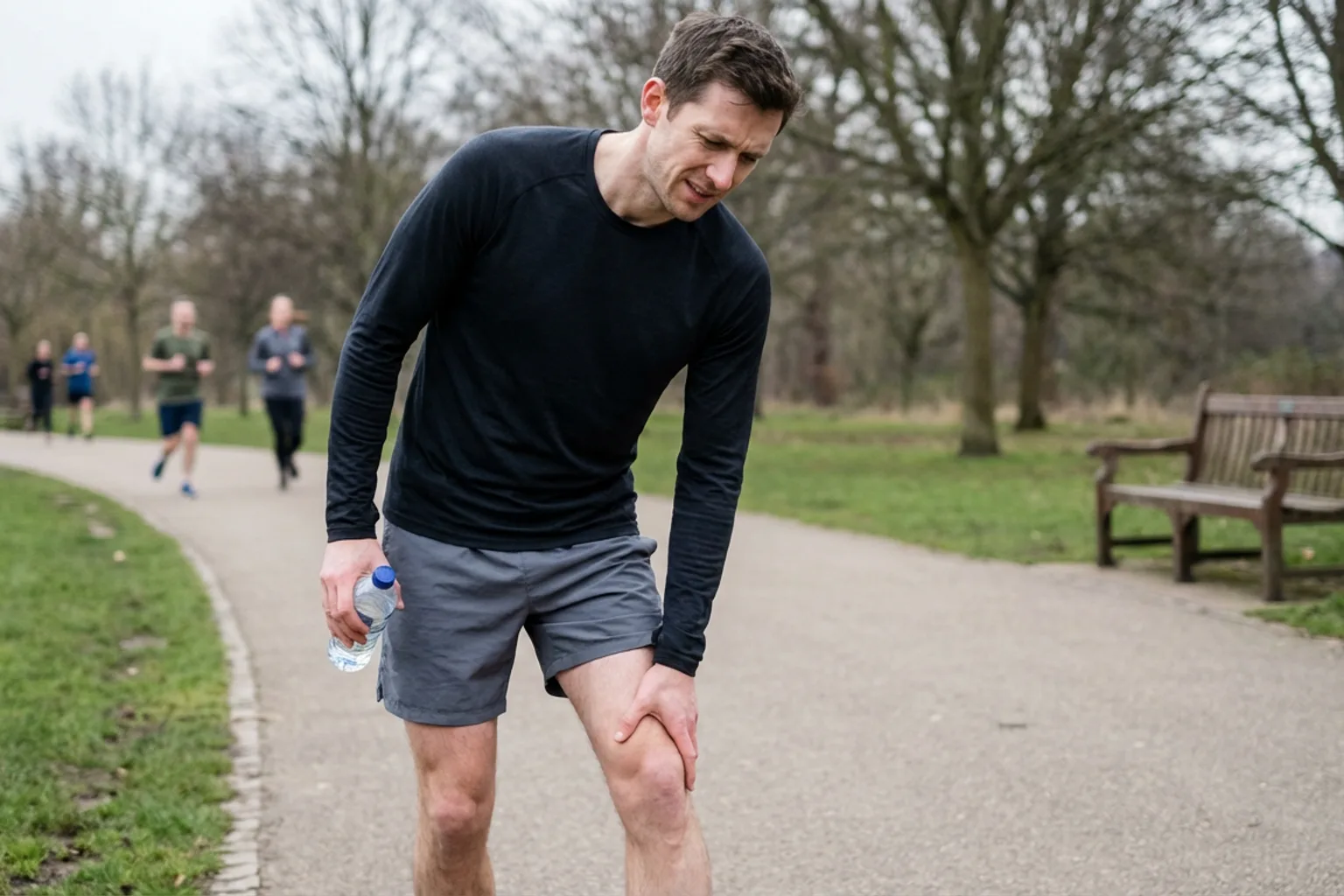
You're mid-training. Your knee is screaming at you on the outside. And the question burning in your mind is: can you keep running with iliotibial band syndrome, or do you need to stop completely?
I get this question from runners every single week. And I know how much is riding on the answer, especially if you've got a marathon on the horizon.
Here's the short version: yes, most runners can continue training with IT band syndrome. But how you manage it over the next few weeks will determine whether you toe the start line feeling strong, or whether you spend race day on the sofa.
Quick Answer: Running with iliotibial band syndrome is unlikely to cause lasting damage, but it will slow your recovery if you don't manage your training load carefully. Reduce your run duration, increase frequency, address the root cause, and follow a structured rehab plan. Most runners recover in 4 to 8 weeks with the right approach.
I've helped hundreds of runners work through IT band syndrome without losing their fitness or missing their goal race. If you want a complete, structured programme that covers exactly this, my Bulletproof Runners programme walks you through every step, from injury management to long-term prevention. But first, let's make sure you understand what you're actually dealing with.

What is Iliotibial Band Syndrome?
Iliotibial band syndrome (ITBS) is an irritation of the fat pad between the iliotibial band and the lateral femoral condyle, the bony prominence on the outside of your knee. The IT band itself is a thick strip of connective tissue that runs from your hip all the way down to just below your knee.
Research suggests ITBS affects somewhere between 5% and 14% of runners, making it one of the most common overuse injuries in distance running. It tends to strike when training load increases quickly, which is exactly why it shows up so often during marathon build-ups.
For years, we thought of ITBS as a friction problem, the IT band rubbing back and forth over the outside of the knee. More recent evidence points toward compression as the main culprit. Either way, the result is the same: pain on the outside of your knee that gets worse the longer you run.
What Causes IT Band Syndrome? Learn more about the common causes of iliotibial band syndrome
Common Symptoms of IT Band Syndrome
- Sharp or aching pain on the outside of the knee, not around the kneecap
- Pain that comes on after a predictable distance into your run, often 15 to 20 minutes in
- Discomfort that eases when you stop running but returns when you start again
- Tenderness to touch on the outer knee
- Pain going down stairs or sitting with a bent knee for long periods
- In more severe cases, pain that spreads up the outside of the thigh toward the hip
If this sounds familiar, read on. You're in the right place.
For a broader look at what might be causing your knee pain, check out my guide to knee pain after running.
What Causes IT Band Syndrome in Runners?
There's rarely one single cause. In my experience coaching runners, it's almost always a combination of factors that tips the balance from "coping fine" to "injured." Here are the most common ones I see:
1. Too Much, Too Soon
This is the big one. ITBS is an overuse injury, and the clue is in the name. I see it constantly in runners who jump from 30 miles a week to 50, or who suddenly add back-to-back long runs in a panic before their marathon. Your tissues simply haven't had time to adapt.
2. Tight Tissues Around the Hip and Thigh
Tightness in the tensor fascia latae (TFL), the muscle at the top of the IT band, can increase tension through the whole structure. This doesn't mean you need to stretch the IT band itself. You can't effectively stretch a thick band of fascia. But releasing tightness in the surrounding muscles helps.
Check out my guide to TFL stretching for runners for some practical techniques.
3. Skipping Your Warm-Up
I know. You're busy. But jumping straight into a hard run with cold, stiff tissues is a reliable way to aggravate your IT band. A proper five-minute running warm-up makes a real difference, especially on cold mornings.
4. Weak Glute Muscles
Weak glutes are one of the most consistent findings I see in runners with IT band syndrome. When your glutes can't control the inward movement of your thigh during each stride, other structures, including the IT band, take on more stress than they should.
My article on essential glute exercises for runners is a good place to start if this is your weak link.
5. Hip Alignment and Running Gait
A hip drop pattern, where your pelvis dips on the opposite side to your stance leg, increases compression on the IT band with every single step. Over thousands of strides, that adds up fast. This is often connected to glute weakness, but it can also be a motor control issue that responds well to gait retraining.
Read more about hip drop running gait and how to fix it.
6. Your Running Shoes
Worn-out shoes that have lost their cushioning and structure can change the way load is distributed through your leg. I'm not saying your shoes are the main cause, but if yours have over 500 miles on them, it's worth considering a replacement as part of your recovery plan.
7. Running on Cambered Roads
This one catches a lot of runners out. Running consistently on the same side of a cambered road effectively puts one leg in a slightly different position to the other on every stride. Over time, this asymmetrical loading can irritate the IT band on the lower leg. Try switching sides, or moving to flatter paths where possible.
Can You Run with IT Band Syndrome? An Honest Answer
Let me be straight with you here, because I think a lot of advice on this topic is either too cautious or not cautious enough.
Running with iliotibial band syndrome is unlikely to cause permanent damage to your knee. Think of it as irritated tissue rather than damaged tissue. The IT band isn't tearing. You're not grinding bone on bone. What you're doing is continuing to compress and irritate an already inflamed fat pad.
My favourite analogy: imagine you've got an insect bite on your arm. Scratching it feels satisfying in the moment, but you always regret it. The itch comes back worse, and it takes longer to heal. Running through IT band pain works the same way.
So yes, you can run. But you need to be smart about it.
Do You Need to Rest Completely?
Not necessarily. Complete rest is rarely the answer for ITBS, and in most cases, I don't recommend it unless your symptoms are severe. Here's how I think about it:
- Mild symptoms (pain comes on late in a run, settles quickly after): Reduce your run duration. Keep moving. Work on the root cause.
- Moderate symptoms (pain comes on within 15 minutes, lingers for a few hours after): Cut your running volume significantly. Consider 2 to 3 short runs per week while you focus on rehab.
- Severe symptoms (pain within minutes, you're limping after runs, pain at rest): Take 1 to 2 weeks off running. Use this time to do your rehab exercises and address the underlying causes.
Should You Stop All Activity?
No. This is where a lot of runners go wrong. They rest from running, do nothing else, and then return to training with exactly the same weaknesses that caused the problem in the first place. The injury comes straight back.
Cross-training is your friend here. Swimming, cycling (if it doesn't aggravate your knee), and pool running all let you maintain your cardiovascular fitness while your IT band settles down. I've had athletes complete strong marathons after spending three weeks on a pool running programme during an ITBS flare-up.
Check out my guide on pool recovery sessions for runners for some practical session ideas.
Running a Marathon with Iliotibial Band Syndrome
Every year, I work with runners who are deep into marathon training when ITBS strikes. It's one of the most common scenarios I deal with. And the good news is: with the right adjustments, most of them make it to the start line.
Here's what I tell them:
- Your weekly mileage matters more than any single long run. You can maintain a solid training base with more frequent, shorter runs.
- the long run is usually the biggest aggravator. Cut it back. A 14-mile long run done pain-free is worth far more than a 20-miler that leaves you limping for three days.
- Adjust your race goals if needed. A finish is a finish. You can chase a PB when you're fully healthy.
If you're training for your first marathon and dealing with ITBS, my article on first marathon tips has some useful perspective on managing expectations and adjusting your plan.
And if you're wondering whether you can even train effectively with fewer runs per week while you manage this injury, read my piece on training for a marathon with 3 runs per week.
Four Steps to Recovering from IT Band Syndrome Faster
These are the four steps I use with every runner I work with who's dealing with ITBS. They work. But they only work if you follow all four, not just the ones that feel easiest.
Step 1: Reduce Your Training Load
Training load management is the single most important thing you can do right now. A reduction in load reduces the irritating stimulus, and gives your body a chance to catch up with the repair process.
If you're keen to keep your fitness up, try this approach:
- Shorten your runs to 30 to 40 minutes maximum
- Increase your run frequency slightly to compensate for shorter sessions
- Replace your longest run with a cross-training session for 2 to 3 weeks
- Avoid back-to-back running days until symptoms settle
This approach keeps your weekly mileage reasonable without hammering the IT band with long, continuous loading.
Training Load Management for Knee Pain Learn how to manage your injury without stopping running completely
Step 2: Manage Pain and Inflammation
Getting on top of the pain and inflammation early makes everything else easier. Here's what I typically recommend:
Ice and Cryotherapy
Apply an ice pack to the outer knee for 10 to 15 minutes after running. The evidence on exactly how ice works is still debated, but most runners find it helpful for short-term pain relief. It's low-risk and worth trying.
Anti-Inflammatory Medication
A short course of non-steroidal anti-inflammatory drugs (NSAIDs) like ibuprofen can help reduce inflammation in the acute phase. Always speak to your GP or pharmacist before starting these, especially if you're running high mileage.
In more severe or persistent cases, a guided corticosteroid injection can provide significant relief and allow you to continue training. I've seen this work well for runners who are close to their goal race and need a window of reduced pain to get their rehab done.
Cortisone Injections for Runner's Knee: What You Need to Know
Compression Tights
Some runners find that wearing compression tights during runs helps reduce symptoms. The evidence is mixed, but if it makes your runs more comfortable and allows you to keep training, it's worth trying. Look for tights with targeted compression around the IT band and outer thigh.
Step 3: Build Strength in the Right Places
Strength work is the most important long-term fix for IT band syndrome. Without it, you're just managing symptoms rather than solving the problem.
The key muscle groups to target are:
- Glute max and glute med: These control hip and thigh alignment during each stride. Weakness here is the most common finding in runners with ITBS.
- Quadriceps: Strong quads help control knee flexion, reducing compressive load on the IT band.
- Hamstrings: These work alongside the glutes to stabilise the hip and knee during the stance phase of running.
Here's a simple IT band syndrome rehab routine to get you started:
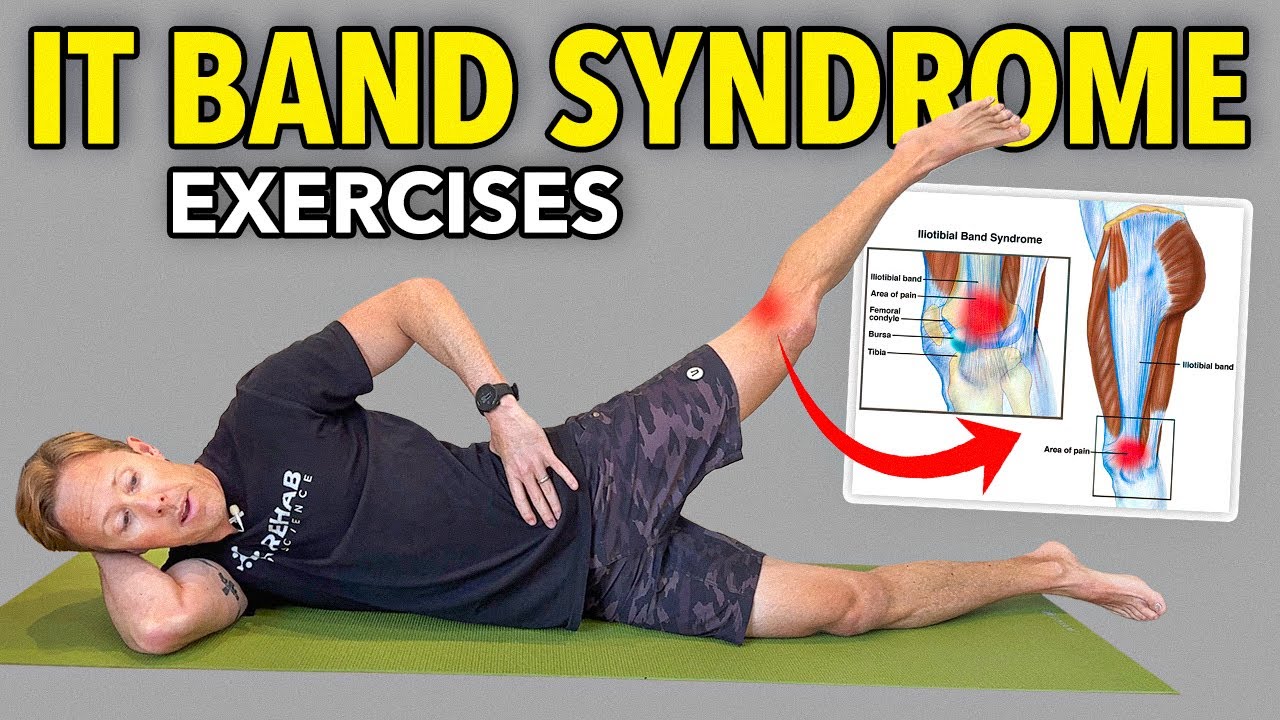
For more targeted glute work, my four essential glute exercises for runners are a great starting point. And if you want a full strength routine that fits around your running, my guide to strength training for runners short on time shows you how to do it in under 30 minutes.
Aim for two to three strength sessions per week. Consistency over weeks and months is what actually shifts the needle here.
Step 4: Address Your Running Technique
This step won't be relevant for every runner, but for many it's the missing piece of the puzzle. If your running gait is placing excessive stress on your IT band, no amount of strength work or rest will fully solve the problem.
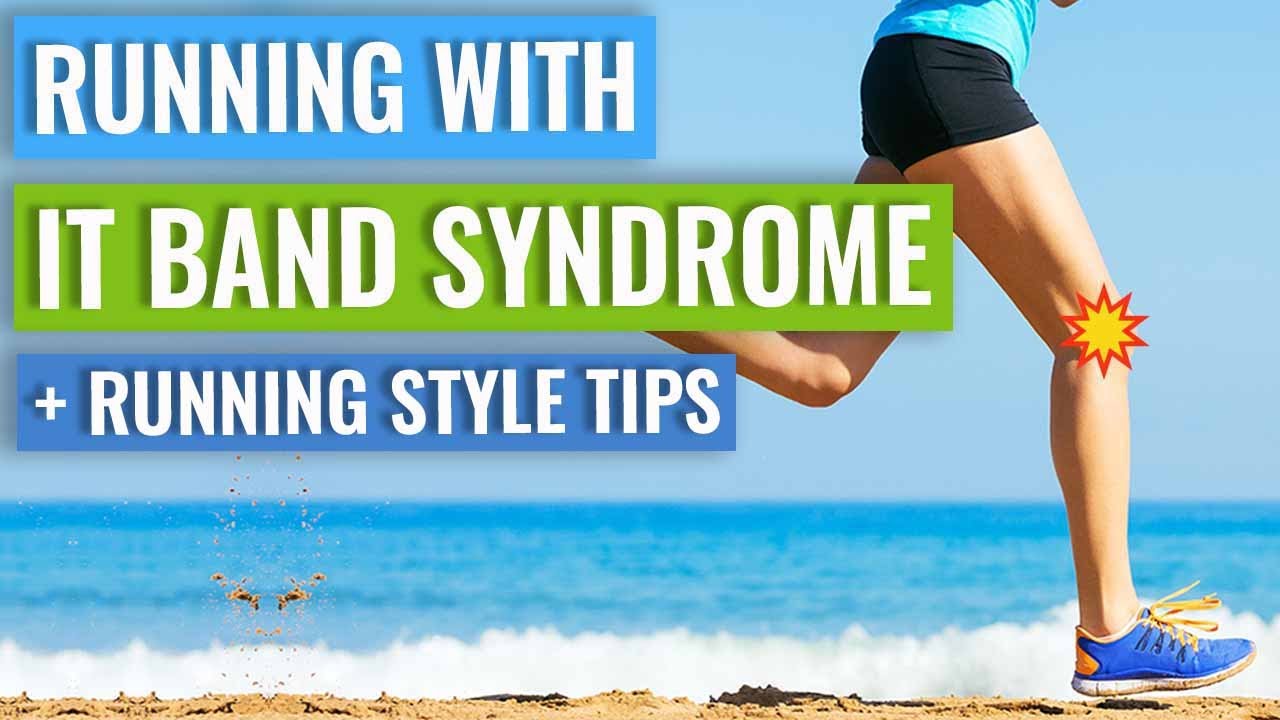
Two technique changes that consistently help runners with ITBS:
- Increase your running cadence. Taking slightly quicker, shorter steps reduces the load on your knee with every stride. Even a 5 to 10% increase in step rate can make a meaningful difference. Read my full guide on how to increase your running cadence.
- Widen your step width. Many runners with ITBS run with a narrow, cross-over gait, where each foot lands close to or across the midline. Widening your step slightly reduces the compressive load on the IT band. My article on stride width and ITB syndrome explains this in detail.
Proper Running Form: 6 Ways to Run More Efficiently

How Long Does IT Band Syndrome Take to Heal?
This is the question every runner wants a definitive answer to. And I wish I could give you one. The honest truth is it depends on how severe your symptoms are, how long you've been running through them, and how consistently you follow your rehab plan.
Here's a rough guide based on my experience working with runners:
| Symptom Severity | Typical Recovery Time | Approach |
|---|---|---|
| Mild (pain late in runs, settles fast) | 2 to 4 weeks | Reduce load, start rehab, keep running short |
| Moderate (pain within 20 minutes, lingers) | 4 to 8 weeks | Significant load reduction, cross-train, rehab twice weekly |
| Severe (pain within minutes, limping after) | 8 to 12 weeks | Rest from running 1 to 2 weeks, then gradual return with rehab |
One thing I always tell runners: rest alone is not enough. I've seen runners take six weeks completely off, return to training, and have their ITBS back within two weeks. If you don't address the underlying weakness and movement patterns, the injury will keep coming back.
For more on getting your return to running right, read my guide on how to return to running after injury.
How to Stop IT Band Syndrome Coming Back
Once you've got your symptoms under control, the work isn't over. This is the phase most runners skip, and it's exactly why so many deal with ITBS season after season.
Here's what I recommend to futureproof yourself:
- Keep up your strength work year-round. Two sessions a week is enough to maintain the gains you've made. Drop it completely and the weakness creeps back.
- Build your mileage gradually. The 10% rule (don't increase weekly mileage by more than 10% per week) is a useful guide, though the real key is listening to how your body responds.
- Don't skip your warm-up. Five minutes of dynamic movement before every run costs you almost nothing and pays dividends in injury prevention.
- Monitor your shoes. Replace them every 400 to 500 miles. Worn-out shoes change your biomechanics in ways you won't notice until something hurts.
- Address fatigue in your training plan. Most ITBS flare-ups happen when runners are tired and their running form breaks down. Build recovery weeks into your plan.
For a broader look at staying injury-free as a runner, my article on how to prevent running injuries covers the key principles I use with all my coached athletes.
Frequently Asked Questions About Running with IT Band Syndrome
Can I run through IT band syndrome pain?
You can, but I'd encourage you to be strategic about it. Running through mild ITBS pain is unlikely to cause lasting damage, but it will slow your recovery. Reduce your run duration, avoid long runs, and use the time to work on your rehab. If the pain is severe or comes on within the first few minutes of running, take a short break and focus on getting the inflammation under control first.
How do I know if my IT band syndrome is getting better?
The clearest sign is that your pain-free running distance increases over time. You might also notice that your knee settles more quickly after runs, and that the tenderness on the outside of your knee reduces. Track your symptoms week by week rather than day by day. ITBS recovery isn't always linear, and a bad day doesn't mean you're going backwards.
Should I foam roll my IT band?
foam rolling directly on the IT band is unlikely to help and can sometimes make symptoms worse in the acute phase. The IT band is a thick, dense structure that doesn't respond well to direct compression when it's already irritated. Instead, focus on foam rolling the TFL at the top of the hip and the lateral quadriceps. Read my full breakdown of foam rolling for IT band syndrome.
Can weak glutes really cause IT band syndrome?
Yes, and this is one of the most well-supported findings in the research on ITBS. Weak glute muscles, particularly the glute medius, reduce your ability to control thigh alignment during each stride. This increases the compressive load on the IT band at the knee. Strengthening your glutes is one of the most reliable ways to resolve ITBS and prevent it returning. My article on whether stronger glutes reduce your injury risk goes into more detail on the evidence.
How long should I rest from running with IT band syndrome?
For mild to moderate symptoms, complete rest from running is rarely necessary. Reducing your training volume and avoiding long runs is usually sufficient. For severe symptoms, a rest period of 1 to 2 weeks is often enough to let the acute inflammation settle before you begin a gradual return to running. The key is to use that rest time productively by doing your rehab exercises, not just sitting on the sofa waiting to feel better.
The Bottom Line on Running with Iliotibial Band Syndrome
Running with iliotibial band syndrome is possible for most runners, but it requires a smart, structured approach. You can't just grit your teeth and hope it goes away. Trust me, I've seen that strategy fail more times than I can count.
The runners who recover fastest are the ones who reduce their load early, get serious about their strength work, and address the root cause rather than just chasing symptom relief. They're also the ones who make it to their goal race feeling strong, not just surviving it.
If you want a complete, step-by-step system that takes you from injured runner to bulletproof runner, that's exactly what I've built with the Bulletproof Runners programme. It covers injury management, progressive strength training, running technique, and a structured return-to-running plan, all designed specifically for distance runners. Hundreds of runners have used it to get past ITBS and other stubborn injuries for good. If you're tired of the cycle of injury, rest, return, repeat, it might be exactly what you need.
In the meantime, start with the four steps above. Be consistent. Be patient. And remember: this injury is fixable.