Glute Dysfunction in Runners: Weakness or Inhibition?
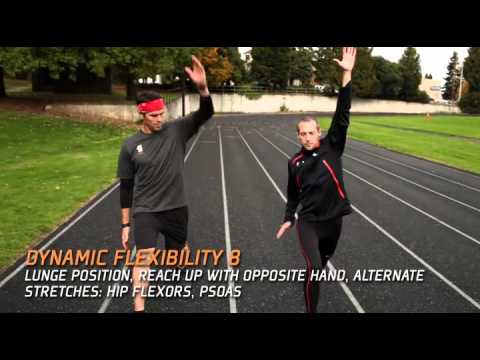
Many of us who have previously suffered from running and triathlon related injuries, will quite possibly have been told by sports injury therapists that we have "Weak Glutes" or that your "Glutes Aren't Firing Properly".
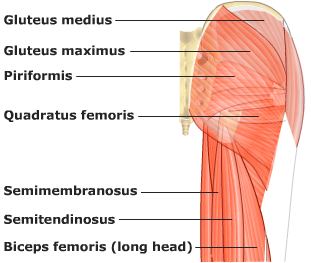
Research indicates a significant correlation between diminished Glute function and athletic injury. For example:
- In a 2007 study of Div III collegiate athletes by Cichanowski et al, 13 females who were diagnosed with unilateral “patello-femoral pain” were found to have significantly weaker hip abductor and external rotator muscle groups of the injured lower extremity.
- In a study of 15 females with “patellofemoral pain” by Ireland et al (2003), hip abduction strength and hip external rotation strength were found to be significantly less than age-matched controls.
- Robinson and Nee’s 2007 study of 10 females who sought physical therapy for unilateral knee pain demonstrated significantly less hip extension, abduction, and external rotation strength than the same number of control subjects with no known knee pathology.
- Average hip abductor (Glute medius) torque in 24 distance runners with ITBS was found by Fredericson et al (2000) to be significantly weaker than that of the uninjured limb and controls.
- Hewitt et al’s 2006 review of ACL injuries in Females reported a number of studies that demonstrated decreased Gluteal muscle activity and/or ability to absorb ground reaction forces by the hip musculature during landing in females who sustained ACL injuries than in uninjured athletes.

But what does this all mean? How does this Glute dysfunction happen? How do you fix the problem?...
In my experience, there are two main types problem which occur around the hips and pelvis, affecting Gluteal function, therefore creating muscular imbalances and the potential for injury:
- Glute Inhibition
- Relative Glute Weakness
Glute Inhibition
Commonly the Gluteal muscles become inhibited, preventing them from properly engaging, thus being able to perform their role. This usually happens due to the position they are forced to adopt when the ideal neutral pelvic posture becomes compromised. This issue particularly occurs in the sagittal plane of motion, creating either an Anterior or Posterior Pelvic Tilt (usually anterior).
The position of your pelvis acts to determine the leverage available to each of it's attaching muscles, those that control and stabilise the hips and lower back. This positioning is a postural pattern and extremely correctable with the right exercises. To broadly describe the ways in which attaching muscle groups can determine your pelvic position: your Hip Flexors pull down on your Pelvis while the lower back extensors pull up. The Abdominals pull up while the Glutes and Hamstrings pull down.
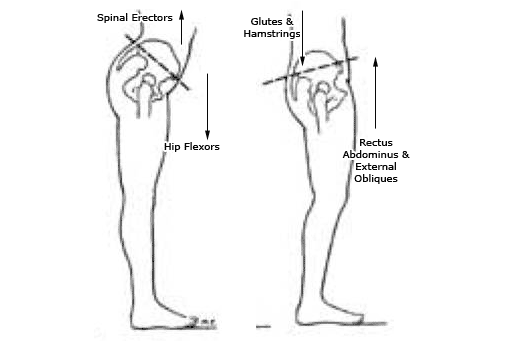
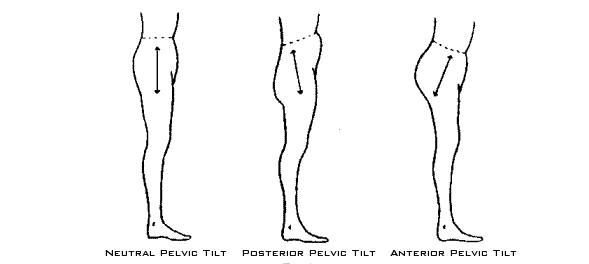
Optimising your pelvic tilt to achieve a neutral position enables your Glutes to sit in a position with the greatest available leverage to act on the Hip. To achieve this, the first thing we have to do is determine whether you have more of an anterior (bottom sticking out), posterior (bottom tucked under), or neutral pelvic posture.
An Anterior Pelvic Tilt means that the top of the pelvis is tilted forward, and the lower back is arched. A Posterior Pelvic Tilt means that the top of the pelvis is tipped back, with the pelvis tucked under the body, as per the diagram below, ideally a neutral position is required for optimal Glute function:
Factors such as excessive sitting during daily life can result in the Hip Flexors becoming chronically tight and over-active, pulling the pelvis into a anteriorly tilted position. This over-activity of the Hip Flexors, in particular Iliopsoas can result in a neuromuscular issue called Reciprocal Inhibition, where one muscle group (in this case the Glutes) is inhibited by the excessive activation of their antagonistic muscle group (in this case the Hip Flexors).
Here's a video showing a couple of simple exercises to help correct an Anterior Pelvic Tilt:
Relative Glute Weakness
This occurs when the function of the Glutes is overshadowed by the disproportionate strength of other muscle groups, built up due to habitual movement patterns and poor technique in training which creates strength imbalances.
Often, even in athletes who display a relatively neutral pelvic posture, the effectiveness of their Glute function is compromised due to the fact that other muscle groups (usually Quads) are, in relative terms, significantly stronger and more developed. This leads to the adoption of movement patterns and habits which place increased emphasis on the stronger muscle groups such as the Quads, rather than allowing the Glutes to contribute properly within the motion.
This is very common in Triathletes who spend a lot of time on the bike. No matter how well your bike is set up for you, it's always going to be a "Quad Dominant" exercise, building strength in your thighs rather than helping your Glutes also develop equally. If left un-addressed in terms of adding exercises to target the Glutes, this kind of strength imbalance can cause injury problems over time as the body learns not to use the Glutes as it tries to favour the stronger Quads.
A classic example of a movement pattern that is usually influenced by strength imbalances is the squat. Many athletes who are "Quad Dominant" in terms of strength will squat in such a way that places excess emphasis on their Quads, placing a lot of strain on the knees. This can be observed by the knees shifting forwards over the toes and the heels beginning to lift off the ground at the bottom of the squat.
Here's an example with using a Single Leg Squat:
It's hugely important for athletes of all types to work on Glute activation during all movement patterns, as a muscle group they really do provide the key to maintaining postural balance and stability.
Example Glute and Core Exercises
Here are a couple of quick videos to give you some workout ideas: