Forefoot Running for Ironman Athletes
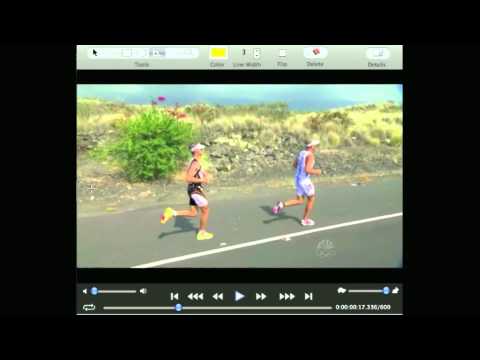
Almost on a daily basis I meet Ironman athletes or aspiring Ironman athletes who have been struggling with trying to teach themselves to run with more of a midfoot or forefoot strike rather than their previous heel strike. Sometimes they have suffered from achilles tendon injuries from their attempts to change their technique, sometimes it's just a feeling of tightness in the calfs - but usually there is (or has been) a difficulty of some sort for these endurance athletes in making the change of foot strike.
Now, it's well worth acknowledging that, there are a small number of Ironman athletes who genuinely do run the whole marathon with a midfoot/forefoot strike. Which is a great example of consistency of form, which I will come on to later… These athletes are few and far between, and it's such variety between athletes which keeps my job interesting and exciting!
But, I want to take a moment to discuss the situation as it applies to the vast majority.
When a heel striking Ironman athlete approaches me and asks for my help to coach them into a more efficient midfoot/forefoot striking technique, my first question is... why?
Usually the answer all boils down to the interest from the running and tri media in forefoot/midfoot/barefoot/minimalist running over recent years, coupled with some targeted marketing from certain running shoe companies. These styles of running have been portrayed as more efficient and a more natural way to run. These claims are all biomechanically sound.
If the athlete was an ITU athlete, racing over a 10km run course, I'd suggest that we should definitely work to get them comfortable in their new forefoot/midfoot technique. But we're not talking about 10km, we're talking about running an Ironman Marathon… This is a completely different proposition in terms of how much volume and time they will have to maintain this now form for during training and racing.
The fatal error that many Ironman athletes make is to focus on the foot in terms of how the foot lands. Instead I encourage them to focus on where the foot lands.

Most ironman athletes come to me with at least a slight overstride, which usually encourages a heavy heel strike. This overstride is usually a result of a slower than optimal cadence for a given pace. With such an overstride (the foot landing ahead of the body) a significant braking force is applied with each step as the heel crashes to the ground ahead of the centre of mass.
By working to develop a slightly elevated running cadence, correct swing leg mechanics and improved running posture, we manage to eliminate the overstride and thus eliminate the excessive braking forces - as the foot lands closer to under the centre of mass.
This new strike under the centre of mass, dictated by the increased cadence, improved posture and swing leg mechanics, may well naturally occur with either a midfoot strike or a gentle heel strike, depending on the athlete.
However, even if the athlete now naturally moves to a midfoot strike, their capacity to maintain this for a full Ironman Marathon is questionable… Remember, they were previously a heel-striker and almost certainly don't have the local muscle strength and endurance in the calf complex to maintain the new position for the full distance.
Some interesting research was published in 2011 by Pete Larson, who showed the significant number of marathon (not even IM marathon) runners who were midfoot/forefoot runners in the early stages of a marathon but had reverted to a heel strike as fatigue kicked in.
We know that heel striking usually comes with an increased overstride, which is an indicator of a decreased cadence for a given pace. So it is safe to assume that for the athletes in the study who had changed from midfoot/forefoot to a heel strike, their cadence had dropped and they were subsequently over striding and braking excessively.
To avoid such a big change and deterioration in form as serious fatigue kicks in, I often get Ironman athletes to practice running with a cadence that provides a strike close to under the centre of mass at marathon pace, and as such, a gentle, glancing heel strike. The technique focus in training and competition should be to maintain a steady and consistent cadence at a rate that discourages overstriding.
Here's a great post from one of my athletes, Russell Cox that talks about developing consistency in running cadence and therefore (to a degree) overall running form during Ironman run training and racing.
There's nothing wrong with learning to run on your forefoot/midfoot, just as an Ironman athlete make sure that you can also run efficiently (without overstriding) with a slight heelstrike.
This is all done to avoid the following: I want to avoid the situation where the athlete can ONLY maintain a optimal stride length and cadence with a midfoot/forefoot strike (due to only practising with a midfoot/forefoot strike), only when fatigue kicks in, for them to slip back to a more familiar heel strike and overstride with lower cadence - because they had only perfected good form with a midfoot/forefoot strike.
As an Ironman athlete you need to be able to avoid the overstride, poor posture and slow cadence, with with either a midfoot/forefoot strike or a glancing heel strike.
Remember, efficiency is key, and on the run efficiency stem from far more factors than simply how your foot lands!
Although I'd personally always run up to 25km on my forefoot, as I fatigue towards 30km and onwards, I move to a gentle heel strike.
If a gentle heel strike under the centre of mass is good enough for Three Time Ironman World Champion Craig "Crowie" Alexander (ironically also Newton brand ambassador!) then it's good enough for me over a marathon!
The important factor is to train your body to be good maintain a good cadence and avoid overstriding, no matter how you land your foot.