Proper Running Technique: Six Ways to Run More Efficiently
Long Distance Running Technique Tips
Whether you're training for a 5k race, preparing to run a marathon, or simply looking to make running easier on your body, running form cannot be overlooked.
Keeping the following tips in mind will help you to maintain proper running technique while you're getting those training miles in the bank!
Proper Running Technique: Top Six Tips
1. Avoid Over-Striding
Regardless of whether you heel strike or forefoot strike, the position of this contact in relation to the rest of your body has a huge role to play in determining how heavy the impact and subsequent braking forces are.
A good rule of thumb in terms of over-striding is to look for the alignment of knee and ankle upon initial contact. Ideally we're looking for the knee to be flexing directly above the ankle on initial contact. If the runner is over-striding, you'll see the ankle ahead of the knee.

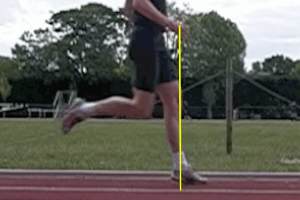
Over-Striding: Both Heel Striking and Forefoot

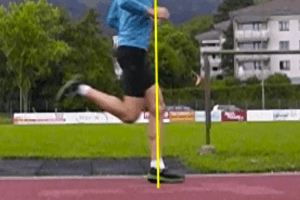
Ankle Under knee: Both Heel Striking and Forefoot
Over-striding patterns such as those seen above can be the result of a number of factors, in particular poor posture and a running with a cadence (stride frequency) too slow for the given speed.
Try increasing your running cadence (stride frequency) by 5% and feel how it encourages you to reduce the over-stride. In turn you'll feel lighter on your feet as your contact time decreases.
A basic digital metronome is a great tool for achieving and maintaining an increased running cadence.
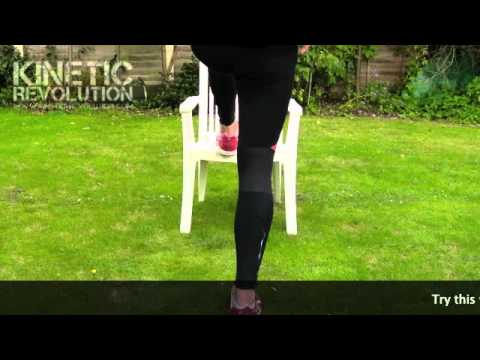
Here's a video which discusses another of the common causes for a runner to over-stride; their swing pattern...
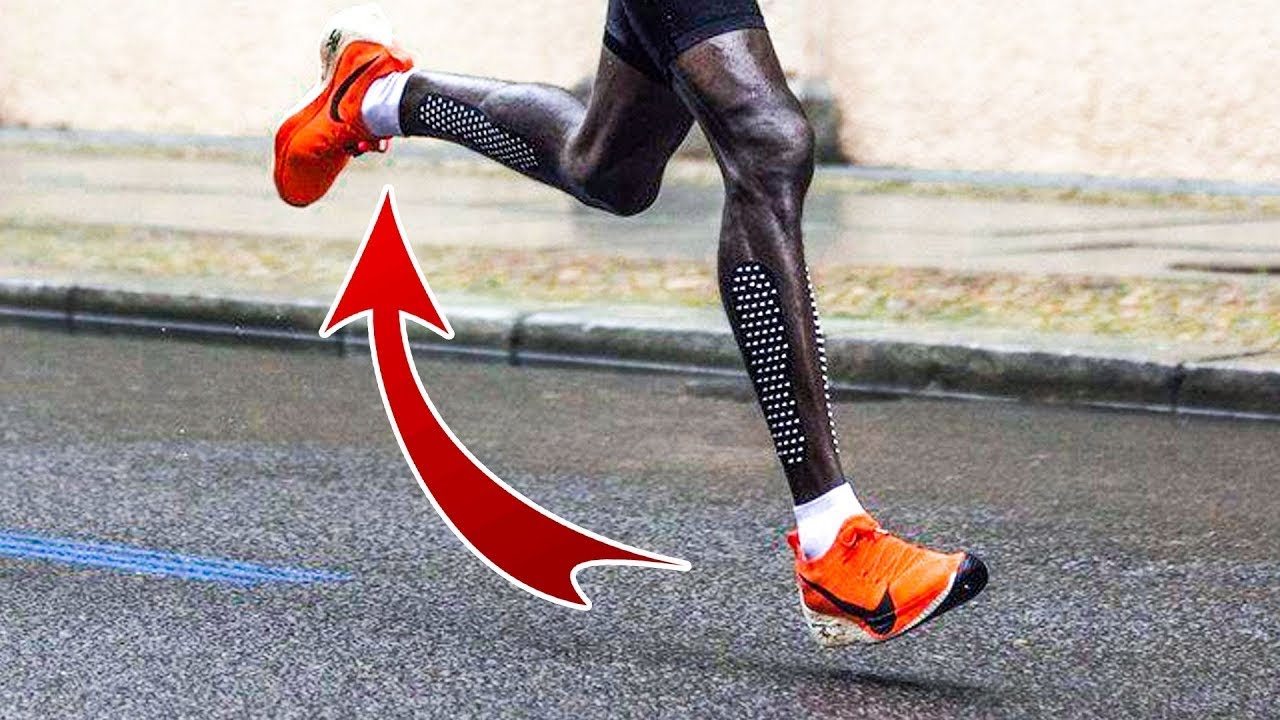
2. Maintain a Tall Posture as You Run
Your running posture is one of the keys to achieving good, efficient form. The postures you sustain at your desk during the working day, in the car or on the sofa have a real carry-over into the way you run.
Most of us spend too much of the day sitting down (I'm sitting down writing this!), shoulders rounded forwards and hips flexed. Through sustaining this type of position, we get short, tight hip-flexors and other anterior muscles and weak, under-active glutes and other posterior muscles.
This then becomes an issue when we try and run, with the body needing to maintain an erect posture and adequate hip extension. Instead, we become a product of what we posturally do most often and run in a semi flexed position - particularly at the hips.
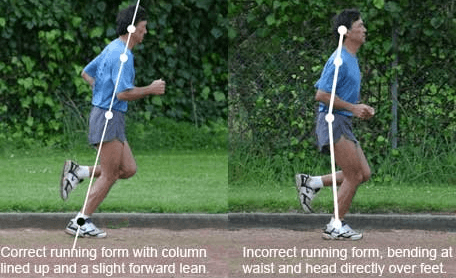
Image courtesy of ChiRunning (we are not ChiRunning Instructors)
Then, consider triathletes. Many of who suffer from all the desk-job related postural issues. We then jump on the bike for hours on end, which only goes to exacerbate the hip-flexor tightness which comes from excessive time spent in a sat down position.
In an effort to counter-act the hip flexor tightness, I get all my athletes and triathletes to perform the hip-flexor mobility exercise below before and after every session, in the gym, at the office... and generally whenever they don't know what else to do during their day!
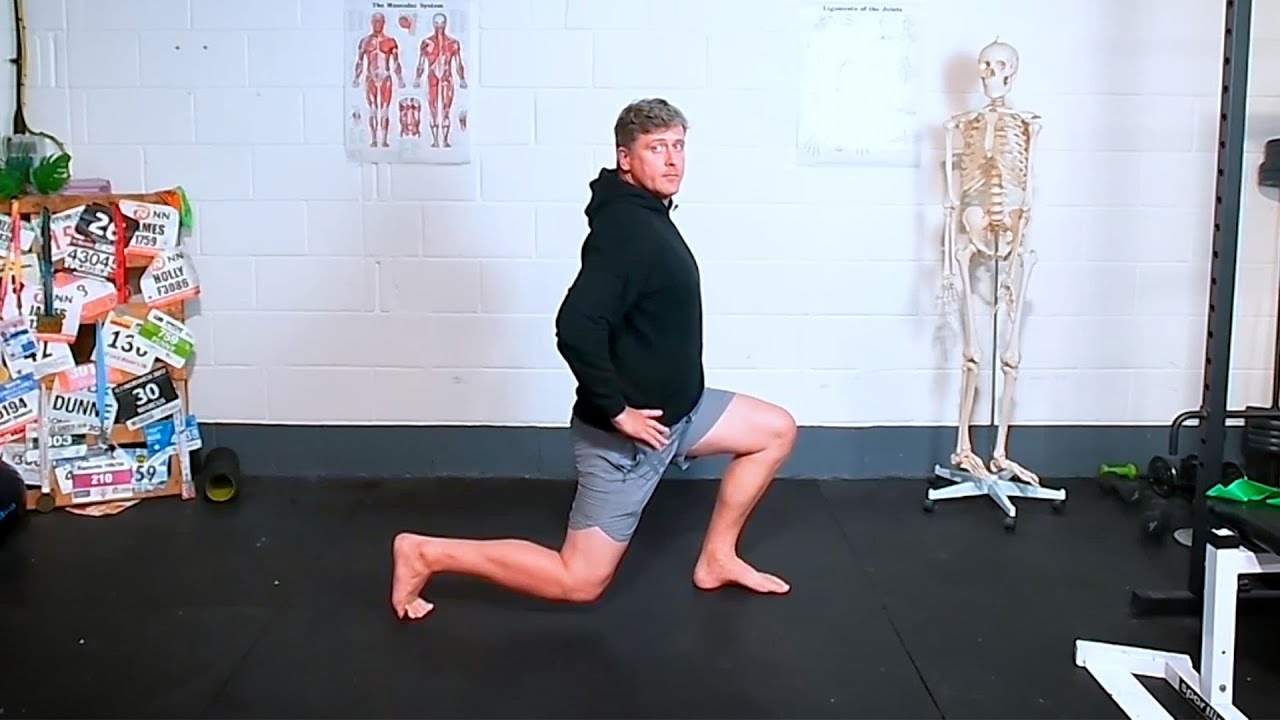
It's all about working to undo the hip flexion pattern, and buy them back some range into extension.
3. Relax Your Shoulders
Tension in your shoulders, neck or upper back can inhibit your arm motion. You need your arms to provide balance, rhythm and power as you run.
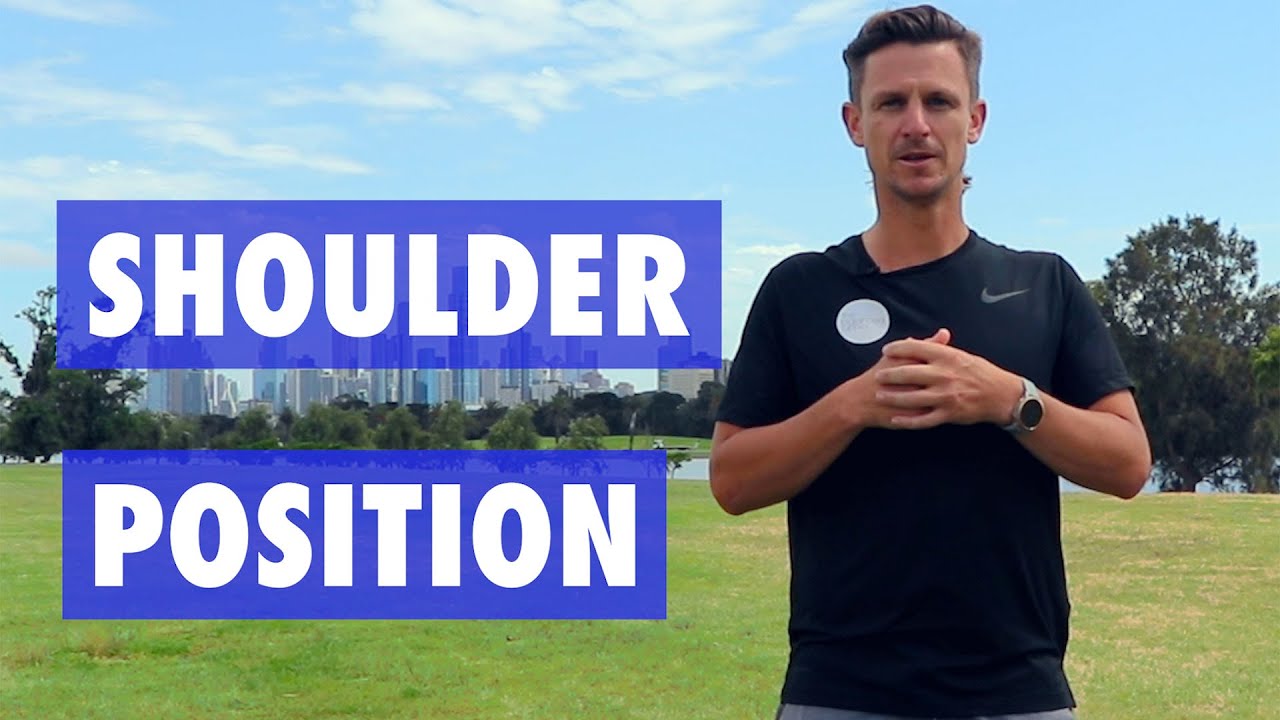
As with your legs, the faster you go, the bigger the arm motion should be. Conversely, running slowly should require small, yet still active motions of the arms, swinging from the shoulder. The movement pattern doesn't change, only the size of movement.
This will take some getting used to, but as you get fatigued keep your arms moving, as they help to keep the legs working at a steady rhythm.
4. Strengthen Your Glutes & Core
No matter how hard you work on improving your running form, a serious limiting factor to your performance and ability to stay injury free is your core strength and ability to activate your gluteal muscles. These two key muscle groups play a huge role in providing stability around your lower trunk, pelvis and hips.
Weaknesses and imbalances around these areas can directly lead to knee, hip and back injuries, as well as running related problems with the lower leg, calf and achilles.
Incorporate regular strength and stability exercises into your weekly routine to improve these key factors and your running will reap the benefits in the long term. Both in terms of injury prevention and improved performance.
5. Don't Bounce or Rotate Excessively
Running is a linear motion, as you move forwards in a straight line. Although many of the constituent movements at individual joints and segments require rotation to function correctly, your body shouldn't be rotating excessively from side to side. Excessive rotation counteracts the end goal of making forward progression. In fact it costs us energy to control and stabilise - a big inefficiency!
In the same way, your energy should be directed in traveling forwards not upwards. A slow rate of cadence and therefore over-stride (see above) often results in excessive upwards displacement or "bounce" within the stride.
For those running a marathon, for example, an extra one inch of bounce with each step (which doesn't sound like much), will equate to one extra mile traveled upwards across the marathon distance... what a waste of effort.*
*Actual figures vary with stride length - but you get the picture!
6. Control Your Breathing
Your breathing rhythm when running should fit in with the overall rhythm that the rest of your body is working to. The ratios with with you inhale and exhale will most likely vary as your intensity of exercise varies. Getting your breathing right is integral to your running technique and should be practiced so that you can maintain your composure on race day as your concentration is elsewhere.
Running Form is Individual
With all the debate over the last few years around running technique, it's important to understand that there is a distinct lack of concrete scientific evidence supporting one method over any other.
In my experience coaching endurance athletes, it's apparent that a midfoot strike pattern is certainly beneficial for a particular type of athlete. That is, if the appropriate progressive approach is taken to develop running technique from head-to-toe, and adequate time is taken to allow the body adapt gradually... a factor so many fail to apply appropriately!
There are however lots of endurance athletes who will be best served maintaining a heel striking technique while consciously working to develop a "light heel strike" rather than a heavy over-striding heel strike, such as that we see from so many runners who slam their heels into the pavement with each stride!
Often these particular athletes have a specific injury history or set of goals (Ironman or ultra running for example) which lead them to become more suited to developing a more 'gentle' heel striking contact, rather than moving all the way to a more aggressive midfoot or forefoot strike.
Look at Craig "Crowie" Alexander - come the latter part of an Ironman marathon, the three-time Ironman World Champion and brand ambassador for Newtons (forefoot running shoe company!) is definitely heel striking to some degree...
What's important however is that even when fatigued Crowie still displays such great running technique from head to toe, that this heel strike occurs without a significant over-stride and therefore isn't heavy or particularly inefficient. It's what we refer to as a "glancing" (or proprioceptive) heel strike - landing gently on the heel before quickly transitioning to the forefoot where the foot fully loads.
Whether you're a heel striker, forefoot / midfoot striker, barefoot runner, etc… hopefully this post has given you a number of simple running technique cues, with which you can improve the efficiency of your running form.