Running Cadence at Different Paces: The Complete Guide
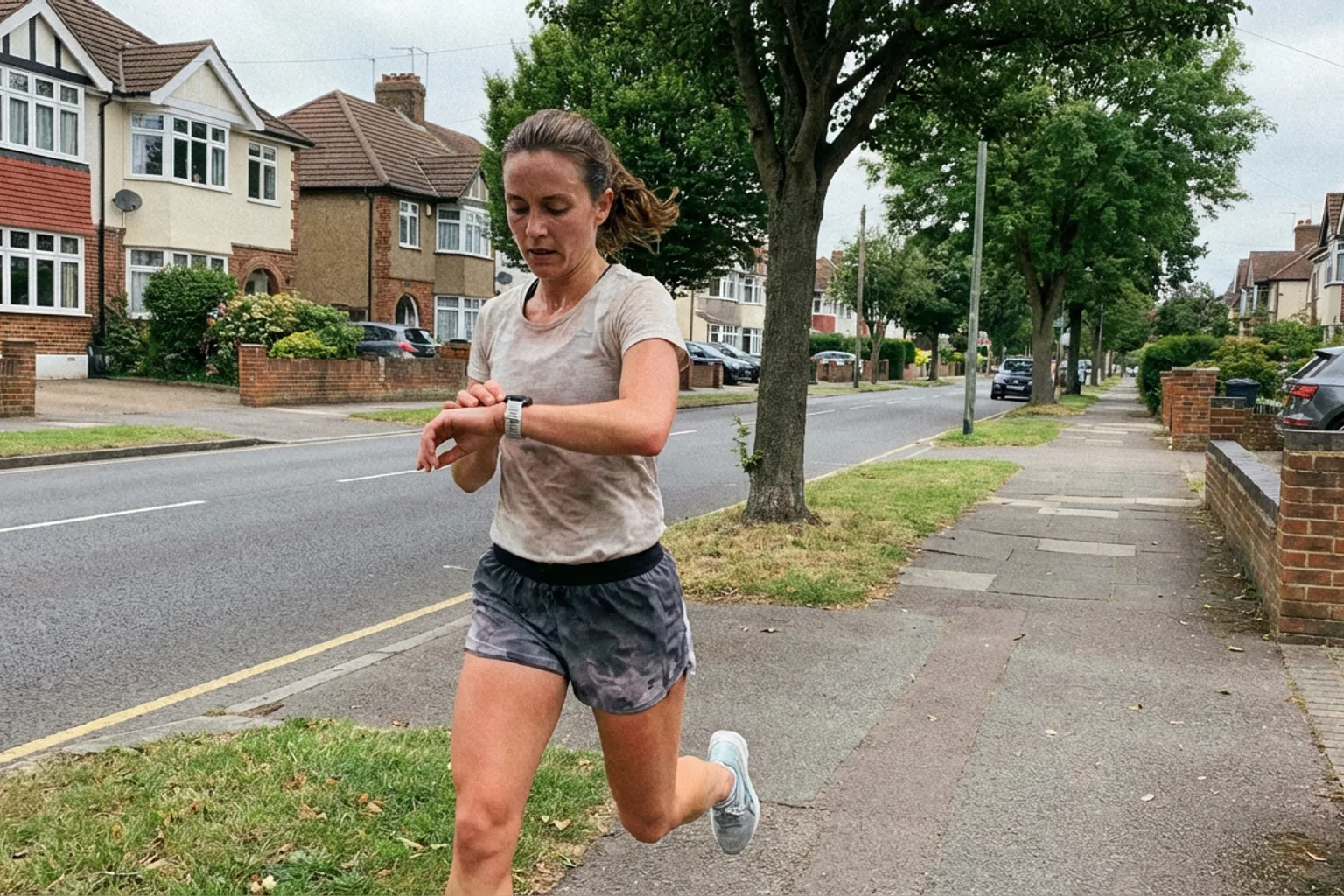
If you've ever been told to "just run at 180 steps per minute," you're not alone. It's one of the most repeated pieces of advice in running. It's also one of the most misunderstood. Running cadence at different paces naturally varies, and chasing a single magic number regardless of how fast you're running can actually hold you back.
I've worked with hundreds of runners over the years, from parkrun beginners to marathon qualifiers, and cadence is almost always part of the conversation. Not because there's a perfect number to hit, but because understanding how your step rate shifts with pace is one of the most practical ways to run more efficiently and reduce your injury risk.
Here's what this guide covers, and why it matters for your running.
Quick Answer: Your running cadence should increase naturally as you run faster. Most runners sit between 160-170 spm at easy pace and 175-185 spm at hard effort. There is no single "correct" cadence for all paces. The goal is to find your optimal cadence range and shift it slightly higher to reduce over-striding and improve efficiency.
Why Running Cadence at Different Paces Actually Matters
When I assess a runner's running gait, one of the first things I look at is how they land relative to their centre of mass. Landing too far in front of your body, what we call over-striding, creates a braking force with every step. That slows you down and loads your joints more than necessary.
Cadence is one of the simplest levers we have to fix this. When you increase your step rate at a given pace, your foot naturally lands closer to your body. Less braking. Less impact. More efficient running.
But here's the thing most guides miss: cadence doesn't stay fixed. It changes with pace. And that's completely normal.
As you speed up, both your stride length and your step rate increase together. Slow down, and both decrease. The problem comes when cadence drops too much at easy pace, or doesn't rise enough at hard pace. In both cases, runners tend to compensate by over-striding.
Understanding your cadence range across different running paces is far more useful than obsessing over one number.

The 180 spm Myth: Why One Number Doesn't Fit All Paces
The 180 steps per minute figure comes from Jack Daniels, who observed elite runners at the 1984 Olympics and noted that most ran at or above 180 spm. That's a useful observation. But it gets misapplied constantly.
Those elite runners were racing. They weren't jogging an easy recovery run. Of course their cadence was high.
As I explain in my guide to improving running cadence, applying 180 spm to every runner at every pace is fundamentally flawed. A runner doing an easy 10-minute mile will naturally run at a lower cadence than the same runner doing a 6-minute mile tempo effort. That's not a problem. That's physics.
The goal isn't to hit 180. The goal is to make sure your cadence at any given pace is high enough to avoid over-striding.
Running Cadence Chart: Typical Ranges by Pace
The chart below shows what typical cadence looks like across different effort levels. These are ranges, not targets. Your numbers will vary based on your height, experience, and running style.

Use this table as a reference guide, not a rulebook.
| Effort Level | Example Pace (min/km) | Typical Cadence Range (spm) | Notes |
|---|---|---|---|
| Very Easy / Recovery | 6:30 min/km+ | 155-165 | Slowest turnover, highest over-striding risk |
| Easy / Aerobic | 5:30-6:30 min/km | 162-170 | Comfortable conversational pace |
| Steady / Moderate | 4:45-5:30 min/km | 168-175 | Comfortably hard, longer efforts |
| Tempo / Threshold | 4:00-4:45 min/km | 174-180 | Hard but controlled, 20-40 min efforts |
| 5K Race Pace | 3:30-4:00 min/km | 178-184 | High turnover, short ground contact |
| Short Intervals (400m reps) | Sub 3:30 min/km | 182-190+ | Maximum turnover for fast work |
Notice how cadence climbs as pace increases. This is your cadence range, and it's individual to you.
Cadence Maths: How Speed, Stride Length and Turnover Connect
Here's a simple equation worth understanding:
Running speed = cadence x stride length
That's it. You can only run faster by taking more steps, taking longer steps, or both. Elite runners do both as pace increases, but they tend to favour higher cadence over excessive stride length because it keeps ground contact time short and reduces injury risk.
Here's a practical example. Say you run at 165 spm with a stride length of 1.2 metres. That gives you a speed of roughly 11.9 km/h. To run at 14 km/h, you'd need to increase cadence, stride length, or both. Most efficient runners achieve this by letting both rise naturally rather than forcing one extreme.
The takeaway: don't try to increase stride length artificially. Let it happen as a result of better mechanics and strength. Focus on cadence as your primary lever.
For more on how running technique affects efficiency, I've covered the key principles in detail elsewhere on the site.
Your Cadence Range: What It Is and Why It Matters More Than a Single Number
I use the term "cadence range" with almost every runner I coach. It refers to the natural spread of step rates you show across different paces, from your easy long run all the way to your fastest 400m rep.
A typical recreational runner might show a cadence range of 162 spm at easy pace up to 178 spm at hard effort. An efficient, well-trained runner might show 170 spm easy up to 186 spm hard. Both ranges are valid. What matters is the shape of the range and whether it's high enough to prevent over-striding at each end.
The most common problem I see is a cadence that drops too low at easy pace. Runners slow down their legs but keep a long stride, which means they're landing well ahead of their centre of mass on every step. This is where a lot of knee pain and shin problems start.
If you want to learn more about how foot strike and landing mechanics affect your knees, that's worth reading alongside this.
How to Shift Your Cadence Range Higher
The key to improving efficiency through cadence is not to jump straight to 180 spm. It's to shift your entire cadence range upward by around 5%. That's a manageable change that your body can adapt to without breaking your natural rhythm.
Here's what that looks like in practice:
- Easy pace cadence of 164 spm becomes 172 spm
- Tempo cadence of 176 spm becomes 184 spm
- Interval cadence of 182 spm becomes 191 spm
Each of these changes reduces over-striding at that pace. Your foot lands closer to your body. Ground contact time drops. Impact forces reduce. And your running feels lighter.
Don't try to make this change all at once. I recommend working on one pace zone at a time, starting with your easy runs. Spend two to three weeks getting comfortable at the new cadence before moving on.
A metronome app is your best friend here. I cover exactly how to use one in my guide to using a metronome to improve running cadence.
What Affects Your Natural Cadence? Five Key Factors
Cadence isn't just about effort level. Several other factors influence your natural step rate.
1. Height and Leg Length
Taller runners tend to run at a slightly lower cadence than shorter runners at the same pace. This is biomechanics, not a flaw. A runner who is 6'2" will naturally have a longer stride and slightly slower turnover than a runner who is 5'4". The 180 spm target was never designed with height in mind.
2. Running Experience
More experienced runners tend to show higher cadence at easy paces. This comes from years of neuromuscular adaptation. Their legs have learned to turn over efficiently without conscious effort. Beginners often show lower cadence because they haven't yet built that automatic rhythm.
3. Fatigue
As you tire, cadence tends to drop. This is one of the most common ways form breaks down in the later miles of a race. I've written specifically about how to maintain running cadence under fatigue on race day, which is worth reading if you're training for a longer event.
4. Terrain and Surface
Running uphill naturally increases cadence as stride length shortens. Running downhill can cause cadence to drop as runners reach forward with their stride. Trail running often produces more variable cadence than road running due to uneven ground. None of this is a problem as long as you're not over-striding.
5. Footwear
Heavily cushioned shoes with a high heel drop can encourage a longer, slower stride. Lighter, lower-drop shoes often promote a slightly higher cadence and shorter ground contact. This doesn't mean you need to change your shoes, but it's worth knowing when you assess your own numbers.

Cadence Across Different Running Workouts
One thing I always explain to runners I coach is that cadence should feel different in different sessions. Here's how to think about it across your training week.
Easy and Recovery Runs
This is where most runners let cadence slip too low. Keep a light, quick turnover even when you're running slowly. Aim for the lower end of your cadence range, not below it. If your GPS watch shows you dropping below 155 spm on easy runs, that's a signal to shorten your stride a little.
Long Runs
Similar to easy pace, but fatigue becomes a factor over time. Focus on maintaining cadence in the final third of the run when everything starts to feel harder. This is great practice for race day.
Tempo and Threshold Runs
Cadence should rise naturally at tempo pace. If it doesn't, you're likely compensating with a longer stride instead. Check in with your step rate during these sessions. It should feel quick and light, not heavy and grinding.
Intervals and Speed Work
At 400m rep pace or faster, cadence should be at its highest. This is where you train your legs to turn over quickly. These sessions build the neuromuscular patterns that eventually carry over into your easier paces. If you want to run a faster 10K, interval work that develops high cadence is a key part of the puzzle.
Common Mistakes Runners Make with Cadence
I see the same errors come up again and again. Here are the ones worth watching out for.
Chasing 180 spm at Every Pace
As I've already covered, this is the big one. Forcing 180 spm on an easy run when your natural easy pace cadence is 164 spm creates an unnatural, choppy stride. It doesn't feel good, and it doesn't help. Work within your range and shift it gradually.
Ignoring Cadence on Easy Runs
Most runners only think about cadence when they're running fast. But easy runs make up the majority of your training volume. If your cadence is too low on easy runs, you're reinforcing poor mechanics for hours every week. That adds up.
Increasing Cadence Without Adjusting Effort
If you increase cadence without reducing stride length, you'll run faster. That's fine in a race. But in training, make sure you're adjusting stride length to keep the same pace when you're working on cadence as a technique drill.
Expecting Instant Results
Changing your cadence is a neuromuscular skill. It takes time. Most runners need six to eight weeks of consistent practice before a new cadence starts to feel natural. Stick with it.
When Cadence Isn't the Right Focus
Cadence is a useful tool, but it's not always the answer. Here are a few situations where I'd steer the conversation elsewhere.
If you're a complete beginner, just getting comfortable running consistently matters more than step rate. Build your aerobic base first. Technique work comes later.
If you're injured, cadence changes alone won't fix the problem. You need to address the root cause. For example, knee pain after running often involves multiple factors including strength, mobility, and load management, not just step rate.
And if your cadence is already in a healthy range and you're running well, there's no need to tinker. Not every runner needs to change their cadence. Some people are already efficient.

How to Measure Your Running Cadence
Most modern GPS watches measure cadence automatically. If yours does, check it across different types of run to build a picture of your range. Look at easy runs, tempo runs, and any interval sessions separately.
If you don't have a watch with cadence tracking, the manual method works fine. Count every time your right foot hits the ground for 30 seconds, then multiply by four. That gives you your steps per minute.
Do this at three or four different paces across a run to map your cadence range. It takes about five minutes and gives you genuinely useful data.
You can also use a metronome app set to your target cadence and simply try to match your footfalls to the beat. Start with your easy pace cadence and build from there. I find this is the most effective way to make cadence changes stick quickly.
For runners who want to work on their overall running technique alongside cadence, I'd also recommend looking at posture, arm swing, and hip extension as connected pieces of the same puzzle.
Cadence and Running Injury Risk
There's solid research behind cadence as an injury prevention tool. A 2011 study by Heiderscheit et al. found that increasing cadence by 5-10% reduced loading at the knee and hip during running. That's significant, especially for runners dealing with knee pain or IT band problems.
The mechanism is straightforward. Higher cadence means shorter stride length at a given pace. Shorter stride means the foot lands closer to the body. Less over-striding means less braking force and less impact loading through the joints.
It's not a cure-all. But for many runners, a modest cadence increase is one of the most effective and least disruptive changes they can make. I've seen it reduce knee pain, shin pain, and hip issues in runners who didn't want to overhaul their entire technique.
If you're dealing with recurring injuries, I'd also recommend reading my guide on how to prevent recurring running injuries, which covers the broader picture beyond just cadence.
Frequently Asked Questions
What is a good running cadence for beginners?
Most beginner runners sit between 155-165 spm at easy pace. This is lower than experienced runners, and that's normal. Rather than chasing a specific number, focus on avoiding a heavy, plodding stride. As your fitness and running economy improve, cadence will naturally rise. A 5% increase from your current baseline is a good starting target.
Does running cadence change with pace?
Yes, always. Cadence increases as you run faster and decreases as you slow down. This is completely normal and expected. A runner might sit at 164 spm on an easy jog and 182 spm during a 5K race effort. The key is that cadence at each pace stays high enough to prevent over-striding and excessive braking forces.
Is 180 steps per minute the right cadence for all runners?
No. The 180 spm figure comes from observations of elite runners during races, not easy training runs. Taller runners, beginners, and anyone running at easy pace will naturally sit below 180 spm. The goal is to find your optimal cadence range and shift it slightly higher, not to force a fixed number regardless of pace or effort.
How do I increase my running cadence without feeling unnatural?
Increase gradually. A 5% rise from your current cadence is enough to improve efficiency without feeling forced. Use a metronome app set to your target cadence and match your footfalls to the beat during easy runs. Stick with it for six to eight weeks before expecting it to feel natural. Trying to change too much too fast is the most common mistake.
Can a higher cadence help with running injuries?
Often, yes. Research shows that increasing cadence by 5-10% reduces loading at the knee and hip. This can help with runner's knee, IT band syndrome, and shin pain linked to over-striding. It's not a replacement for addressing strength or mobility issues, but it's one of the most accessible technique changes available to most runners.
The Bottom Line on Running Cadence at Different Paces
Here's what I want you to take away from all of this. Running cadence at different paces is supposed to vary. That's not a flaw in your technique. It's how running works.
Your job is to make sure your cadence at each pace is high enough to keep you running efficiently, with your foot landing close to your body rather than reaching out ahead of it. If you can do that across your easy runs, your tempo sessions, and your hard intervals, you'll run with less braking force, less impact, and a much lower injury risk.
Start by measuring your current cadence range across a few different types of run. Then aim to shift that range upward by around 5%. Use a metronome, be patient, and give it at least six weeks.
It's one of the most effective changes you can make to your running, and it doesn't require any new kit or a complete overhaul of your technique.
If you want to go deeper on the technique side of things, my guide to how to increase your running cadence is the natural next step. And if you're working on your form more broadly, the six ways to run more efficiently covers the full picture.